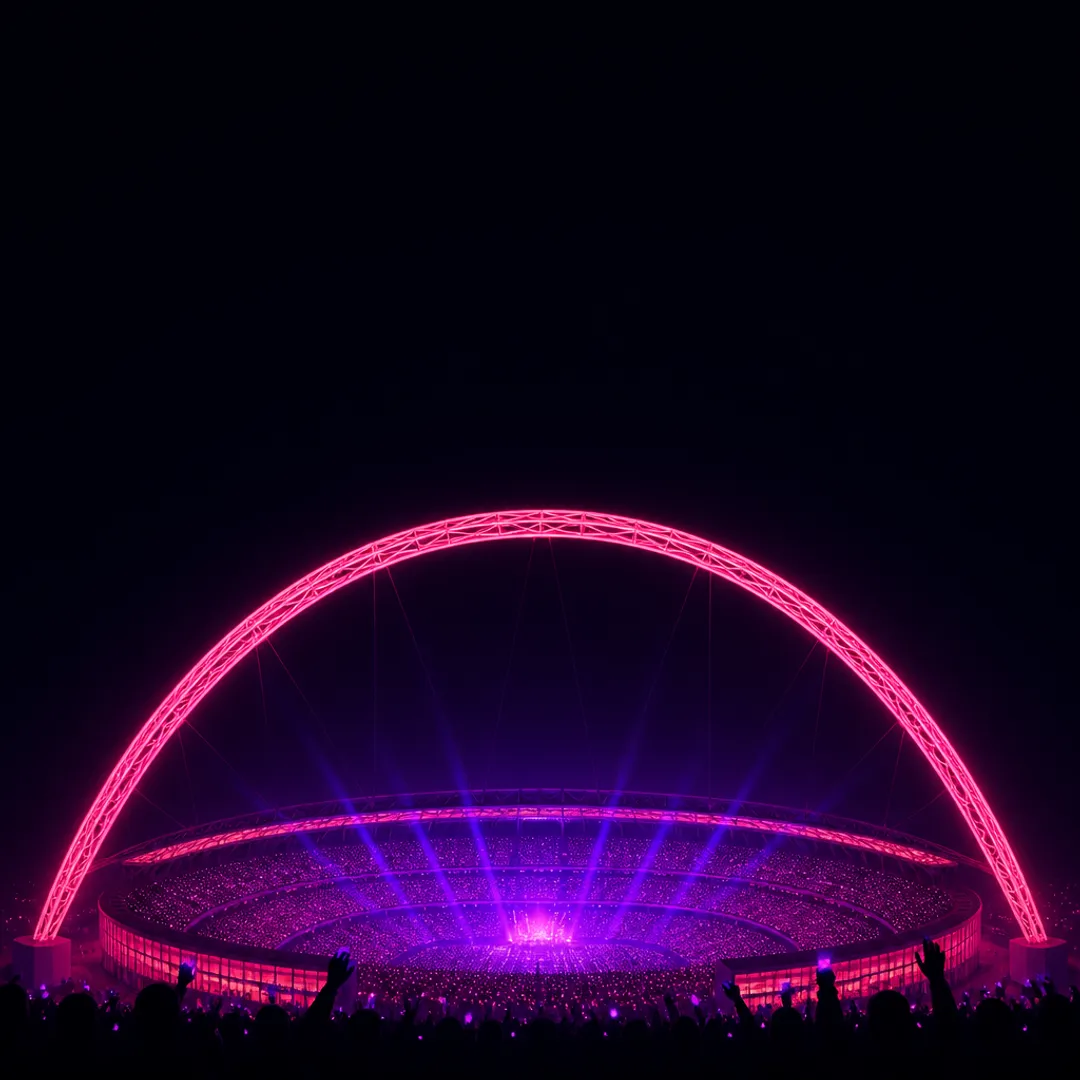
There have been two Wembley Stadiums on the same patch of north-west London. The first, with its famous Twin Towers, stood from 1923 to 2000 and hosted Live Aid. The second, crowned by a 134-metre arch, opened in 2007 and is the biggest stadium in the UK. Both were built for football. Both became one of the most famous concert venues in the world.
The Empire Stadium
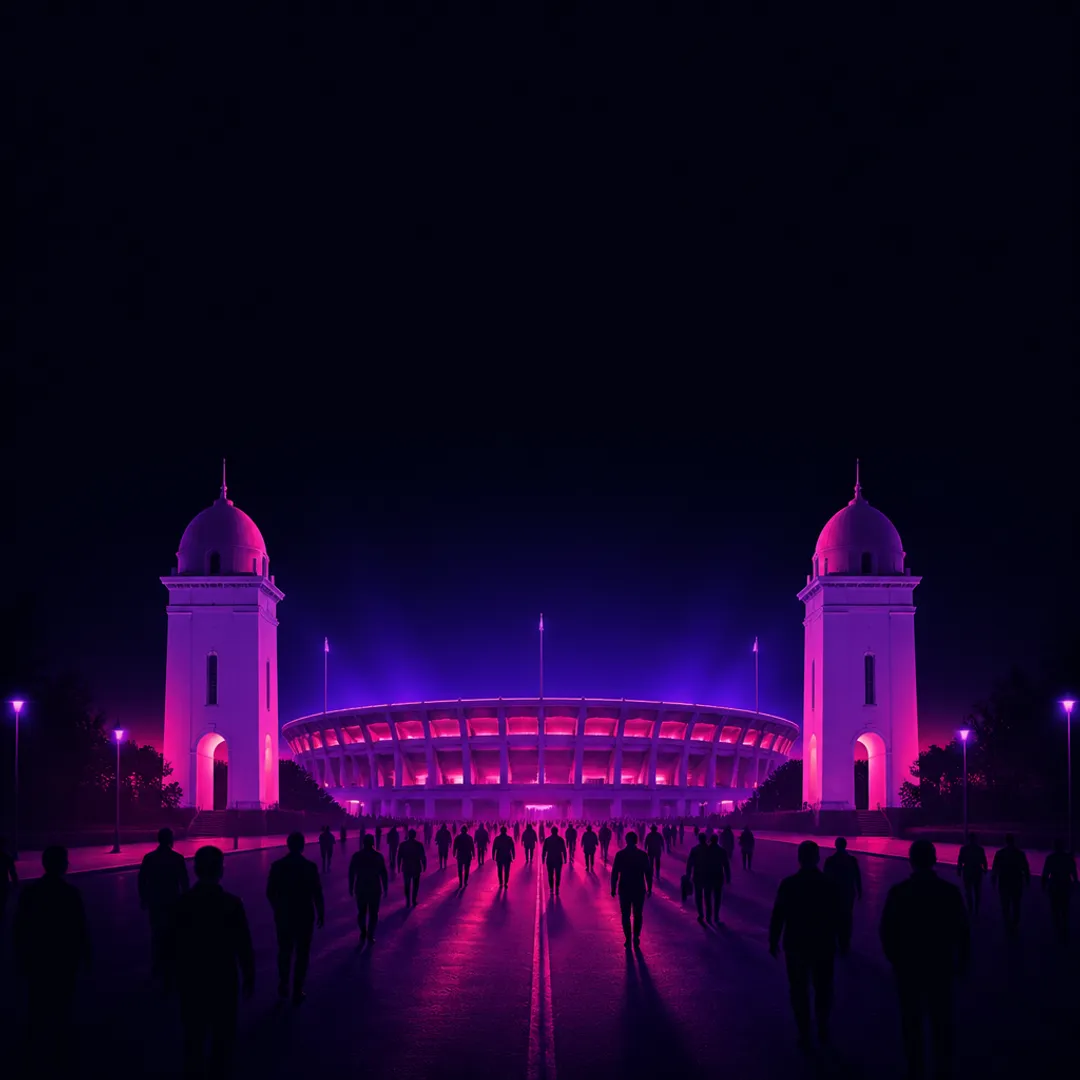
The original stadium opened on 28 April 1923 as the Empire Stadium, built for the British Empire Exhibition of 1924–25. It was meant to be knocked down when the exhibition ended, and it survived. For nearly 50 years it was a sports ground: FA Cup finals, the 1948 Olympics, the 1966 World Cup final. Music arrived in August 1972 with the London Rock and Roll Show, an all-star bill, and after that the concerts kept coming.
Live Aid, Queen and Michael Jackson
The most famous day in its history came on 13 July 1985, when Wembley hosted the British half of Live Aid. David Bowie, Queen, Paul McCartney, Elton John, Phil Collins, Status Quo, the Who, Dire Straits and U2 all played. A year later, on 11 and 12 July 1986, Queen came back for two nights of their own on the Magic Tour; the second was recorded and released as Live at Wembley '86. After Freddie Mercury's death, the surviving members of Queen and a long list of guests played the Freddie Mercury Tribute Concert there on 20 April 1992.
The old stadium's record-holder was Michael Jackson, with 15 shows, more than any other artist. Seven of them came on the Bad World Tour in 1988, seen by a combined 504,000 people, a Guinness World Record. Bruce Springsteen drew the biggest single crowd for a concert there, 80,000, on the Tunnel of Love Express Tour in 1988. Genesis played four sold-out nights in a row in July 1987, and Madonna played eight shows between 1987 and 1993.
Plenty of other big moments happened there too. Wham! played their farewell concert, The Final, on 28 June 1986. Pink Floyd played two shows in August 1988 and lit up the approach with World War II searchlights. Cliff Richard celebrated 30 years in music with two nights in June 1989 in front of 144,000 people. U2 played the old stadium nine times between 1985 and 1997, and the Rolling Stones came back in 1982, 1990, 1995 and 1999.
The last nights under the towers
The stadium's last years belonged to two bands. On 21 and 22 July 2000 Oasis played two nights there, recording the live album and video Familiar to Millions; they were the last UK band to headline the old Wembley. Bon Jovi followed on 19 and 20 August 2000 and were the last musical act of all. The stadium closed that October and was demolished in 2002–03, towers and all.
The new Wembley
The new stadium, designed by Foster + Partners and Populous and built for £798 million, was handed over in March 2007 and officially opened with the FA Cup final on 19 May. It has 90,000 seats, making it the biggest stadium in the UK and the second-biggest in Europe after Barcelona's Camp Nou. Its arch carries more than three-quarters of the roof's weight, and concerts were part of the plan from the start, to help pay for it.
Bon Jovi, the last act at the old stadium, were supposed to be the first at the new one, but the building was finished late and their shows were moved elsewhere. So the first concert at the new Wembley was George Michael, on 9 June 2007. A week later Muse became the first band to sell it out, on 16 and 17 June, and released a live DVD of the shows. In the first week of July came two big charity shows: the Concert for Diana on 1 July, for what would have been her 46th birthday, and Live Earth on 7 July.
Records at the new stadium
Madonna's sold-out 2008 show grossed nearly $12 million, at the time a record for a single Wembley concert. Take That played eight nights in the summer of 2011 on Progress Live. There were no concerts at all in the summer of 2012, because of the Olympics; the next year The Killers played their biggest headline show to date and debuted a song written for the night, “Wembley Song”. One Direction played to 246,000 people over three nights in June 2014.
Adele closed her 2017 world tour there with two shows billed as “The Finale”. The first, on 28 June, drew 98,000 people, a stadium record for a UK music event. Two more planned shows were cancelled on medical advice after she injured her vocal cords. In 2019 BTS became the first K-pop act to headline and sell out Wembley, and the Spice Girls' three closing nights of their reunion tour were the highest-grossing engagement of the year, winning a Billboard award for top boxscore. In 2023 The Weeknd sold 89,179 tickets for one night, a record for a traditional concert layout.
Some nights were about more than records. In June 2022 Harry Styles moved two shows to Wembley from The O2 Arena because demand was so high. On 3 September 2022 Foo Fighters filled the stadium for a tribute to their drummer Taylor Hawkins, with guests including Liam Gallagher, Queen, Paul McCartney and Lars Ulrich. Blur played two reunion shows in July 2023, and in 2025 Dua Lipa and Blackpink both played two sold-out nights.
The most nights
The new stadium has turned into a place where artists stay for a week. Taylor Swift played eight Eras Tour shows in June and August 2024, the first woman to schedule six, seven and then eight on one tour, and passed Michael Jackson's record for the most nights by a solo performer across the two stadiums. Oasis, who had last played there in 2009, booked seven nights for their 2025 reunion.
But the record belongs to Coldplay. They played Wembley twice in 2009 and four times in 2016, then six times in August 2022 and ten times in August and September 2025 on the Music of the Spheres tour: the first act to play ten shows there in a single year, and 22 in all. Harry Styles then went further: by January 2026 his Together, Together tour had 12 Wembley nights confirmed for that summer, more than Coldplay's ten in a year. And on 12 September 2026 Diljit Dosanjh became the first Punjabi artist to headline the stadium, in front of 92,000 people.
Wembley at a glance
- The Empire Stadium opens for the British Empire Exhibition.
- The London Rock and Roll Show: the stadium's first concert.
- Live Aid, the British half.
- Michael Jackson plays seven nights to 504,000 people; he finishes with 15 shows at the old stadium.
- Bon Jovi play the last concerts at the old Wembley. Demolition follows in 2002–03.
- George Michael plays the first concert at the new stadium.
- Adele: 98,000 people, the stadium's UK music-event record.
- Taylor Swift: eight Eras Tour shows.
- Coldplay: ten nights in one year, 22 in all. Oasis: seven.
- Harry Styles: 12 nights booked for the summer, a new record for one year.
Going to a gig at Wembley
The classic approach is Olympic Way, the long avenue that leads up to the stadium with the arch ahead of you. At the top stands a twice-life-size bronze of Bobby Moore, England's 1966 World Cup-winning captain, unveiled outside the entrance in May 2007 and looking back down the road.
Wembley's gig history runs alongside London's other great venues. Rock in Hyde Park started with a free afternoon in 1968, and Brixton Academy began as a picture palace in 1929. Across the Atlantic, Madison Square Garden is where Billy Joel set his own record, with 150 shows. For the tour that holds Wembley's record, read Coldplay's Music of the Spheres tour in numbers, and for the band that closed the old stadium and filled seven nights at the new one, the Oasis reunion in numbers.
Seen a show at Wembley?
Log your Wembley gigs in your OutTwo gig diary, keep the setlists, and find people going to the next one.
Join OutTwo freeSources
- The old stadium, its concerts and records: Wikipedia, “Wembley Stadium (1923)”, read 23 Oct 2026
- The new stadium, its concerts and records: Wikipedia, “Wembley Stadium”, read 23 Oct 2026
- Coldplay's 2022 and 2025 dates: Wikipedia, “Music of the Spheres World Tour”