Hyde Park is a Royal Park in the middle of London, and music there is older than rock: its bandstand, moved over from Kensington Gardens in 1886, was holding up to three concerts a week by the 1890s. But the story most people mean when they say "Hyde Park concerts" starts on a June afternoon in 1968, and it runs from free shows for hippies on the grass to a nine-night summer series under a £438m contract.
The free concerts, 1968–1976
The first rock concert in the park was put on by Blackhill Enterprises, a management company founded by the four original members of Pink Floyd with Peter Jenner and Andrew King. On 29 June 1968, Pink Floyd, Roy Harper and Jethro Tull played to an audience of about 15,000. Wikipedia notes that all of the early gigs, from 1968 to 1971, were free.
The next summer, on 7 June 1969, Blind Faith (Eric Clapton, Steve Winwood, Ginger Baker and Ric Grech) played their debut gig at a free concert in the park. Mick Jagger and Marianne Faithfull were in the crowd. Four weeks later, it was Jagger's turn.
5 July 1969: the Stones in the Park
The Rolling Stones' free concert was planned as a debut. It was their first public concert in more than two years, and the first gig with their new guitarist, Mick Taylor, who had been introduced at a press conference at the park's bandstand on 13 June. Then, on 3 July, two days before the show, Brian Jones, who had left the band a month earlier, was found drowned in the swimming pool at his home in Sussex. He was 27.
The band went ahead and dedicated the concert to him. Fans began arriving with candles the day before, and by the morning, according to Bill Wyman, 7,000 people were already there. Estimates of the final crowd run from 250,000 to half a million; BBC News uses "an estimated 250,000".
Jagger came on in a white dress made for Sammy Davis Jr. at the Mr Fish boutique, asked the crowd to "cool it for a minute", and read two stanzas of Shelley's Adonaïs, an elegy for Keats. Then white butterflies were released over the stage. Wikipedia, citing the Jagger biographer Philip Norman, says the Royal Parks had stipulated that any butterflies should be sterilised and should not be cabbage whites; cabbage whites are what was released. British Pathé filmed it:
Security was handled, at the suggestion of the Grateful Dead's manager Rock Scully, by about fifty Hells Angels, who patrolled near the stage in exchange for a cup of tea. There were twelve arrests, and a police report later called the Angels "totally ineffective". The band reached the stage in an armoured personnel carrier, opened with "I'm Yours and I'm Hers", a Johnny Winter song that Jones had loved, and closed with an 18-minute "Sympathy for the Devil". King Crimson, who had not yet released an album, were among the support acts.
The concert was free because, Jagger said, the band had not made much from touring and the audience would have a better time not paying; Granada Television paid for exclusive rights and broadcast it as The Stones in the Park. The Times reported the next day that the official estimate of damage to the park was about £100.
The free shows went on. Pink Floyd came back on 18 July 1970 to play new material from Atom Heart Mother, and Kevin Ayers and Gong played in 1974. In 1976 came Queen's free concert, on 18 September, organised by Richard Branson, with a crowd usually put at 150,000 to 200,000. It ran past its curfew, so there was no encore: police warned that Freddie Mercury would be arrested if he went back on stage. It would not be the last curfew story in the park.
Live 8 and Pink Floyd's last bow
The later big shows in the park were mostly commercial: the Prince's Trust's Party in the Park ran from 1998 to 2004, and Wireless began there in 2005. In 2005 the Prince's Trust gave up its event so that Bob Geldof and Midge Ure could stage the main Live 8 concert in Hyde Park on 2 July 2005, ahead of the G8 summit. It was free: 66,500 pairs of tickets went to the winners of a £1.50 text-message competition that drew more than two million entries.
“Ladies and gentlemen, it's two o'clock. Welcome to the greatest rock concert in the world.”
— Opening announcement, as reported by the Guardian, 2 July 2005
Paul McCartney and U2 opened with "Sgt. Pepper's Lonely Hearts Club Band". Madonna said afterwards that it was the biggest audience she had ever played to. And late in the evening, the band whose managers had put on the park's first concert in 1968 came back to it: Pink Floyd, with Roger Waters, David Gilmour, Richard Wright and Nick Mason playing together for the first time in 24 years. They played "Speak to Me/Breathe", "Money", "Wish You Were Here" and "Comfortably Numb". It was the classic line-up's last performance: Wright died in 2008. The concert, the Guardian reported, closed at midnight, three hours late.
The curfew wars
Through the late 2000s, Hyde Park Calling (later Hard Rock Calling) and Wireless brought summer weekends of big names: Roger Waters playing The Dark Side of the Moon in 2006, Neil Young joined by Paul McCartney in 2009. The licence had a hard stop. In 2007 Aerosmith, playing their first UK concert in eight years, had to finish at 10.30pm because of the curfew.
The most famous case came on 14 July 2012. Bruce Springsteen and the E Street Band had played for more than three hours at Hard Rock Calling, and McCartney had joined them for "I Saw Her Standing There" and "Twist and Shout". By then they were half an hour past the curfew. Their microphones were cut, and, the Independent reported, they had to leave the stage in silence. Westminster Council said:
“Concert organisers, not the council, ended last night's concert in Hyde Park to comply with their licence, which allows them to run the concert until 10.30pm.”
— Westminster City Council, via the Independent, 15 July 2012
Steven Van Zandt asked on Twitter when England had become a police state. London's then mayor, Boris Johnson, said that if anyone had called him, his answer would have been "for them to jam in the name of the Lord!" Earlier that year, after a rise in noise complaints, Westminster had already cut the number of concerts in the park from 13 a year to nine, and capacity from 80,000 to 65,000, and in some cases 50,000, from 2013.
BST Hyde Park
Live Nation had run events in the park for about fifteen years. In November 2012, Pollstar reported that it had pulled out of the bidding, calling the tender "flawed", and that AEG would produce the Hyde Park shows for the next five years. Hyde Park Calling and Wireless moved out, and in 2013 AEG launched British Summer Time Hyde Park: a series of concerts across up to three weeks of June and July.
Its first headliners were the band that had made the park famous. The Rolling Stones returned on 6 July 2013, 44 years after the butterflies, and added a second date, 13 July, after the first sold out within minutes. Mick Taylor joined them for "Midnight Rambler" and "Satisfaction". Jagger promised the BBC he would keep the poetry to a minimum, and said of the 1969 dress: "I can still just about get into the zippers." The Stones came back again in 2022.
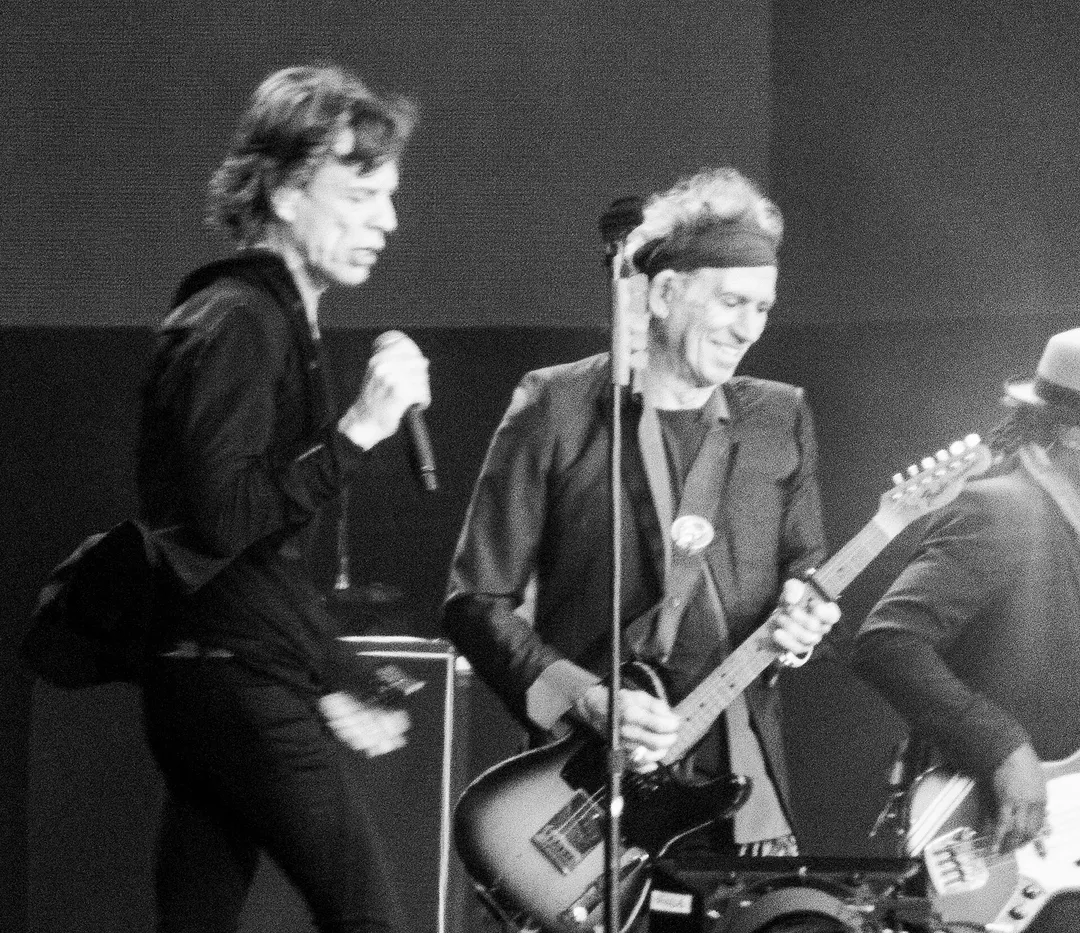
Since then the BST bill has read like a roll call: Black Sabbath and Neil Young in 2014, Taylor Swift and The Who in 2015, Stevie Wonder in 2016, 2019 and 2025, Roger Waters and The Cure in 2018, Adele and Pearl Jam in 2022, Bruce Springsteen and Blackpink in 2023, Kylie Minogue in 2015 and 2024, Olivia Rodrigo and Sabrina Carpenter in 2025, and Garth Brooks, Mumford & Sons and Lewis Capaldi in 2026. The 2020 series was cancelled because of the pandemic.
Going to a Hyde Park concert today
BST is run by AEG Presents under a contract with The Royal Parks for 2022 to 2027, which a government tender notice values at £438m. For years the licence allowed seven shows of 64,999 people and two of 49,999. In June 2026, Westminster's licensing committee allowed all nine to go up to 69,999, despite an objection from the Metropolitan Police.
The curfew has not moved: 10.30pm Monday to Saturday, and 10pm on Sundays. If your headliner is the kind of band that plays for three hours, now you know why the set ends where it does.
Going to BST Hyde Park?
Find the people going to the same night, and keep every gig in your diary.
Join OutTwo freeSources
- The park, the bandstand and the free concerts: Wikipedia, “Hyde Park, London”, “List of concerts in Hyde Park”, “Blackhill Enterprises” and “Blind Faith”, read 10 Oct 2026
- 5 July 1969: Wikipedia, “The Stones in the Park” (citing Wyman, Norman and The Times, 7 Jul 1969); the Guardian, 7 Jul 2011; BBC News, 3 Apr 2013; British Pathé
- Queen 1976: Wikipedia, “Queen (band)” and “Queen Hyde Park 1976”
- Live 8: the Guardian, 2 Jul 2005 and Wikipedia, “Live 8”
- Curfews and licensing: the Independent, 15 Jul 2012; BBC News, 17 Feb 2012; Wikipedia, “Calling Festival” and “Wireless Festival”
- BST: Pollstar, 5 Nov 2012; BBC News, 9 Apr 2013; Wikipedia, “British Summer Time (concerts)” and “Hyde Park Live”; contract: Find a Tender notice 005132-2023; 2026 licence and curfews: Time Out London, 11 Jun 2026