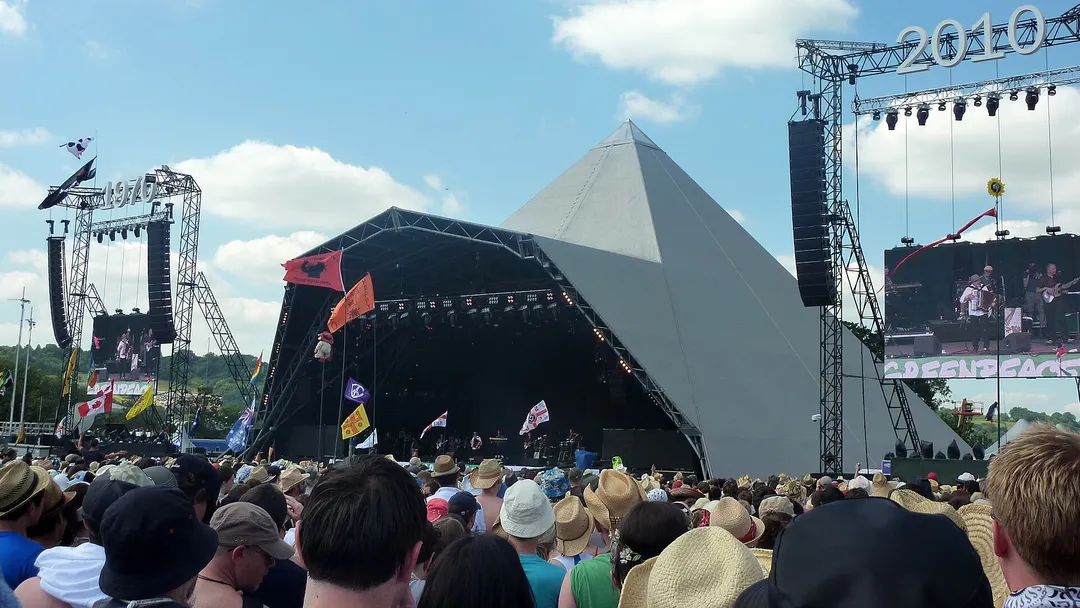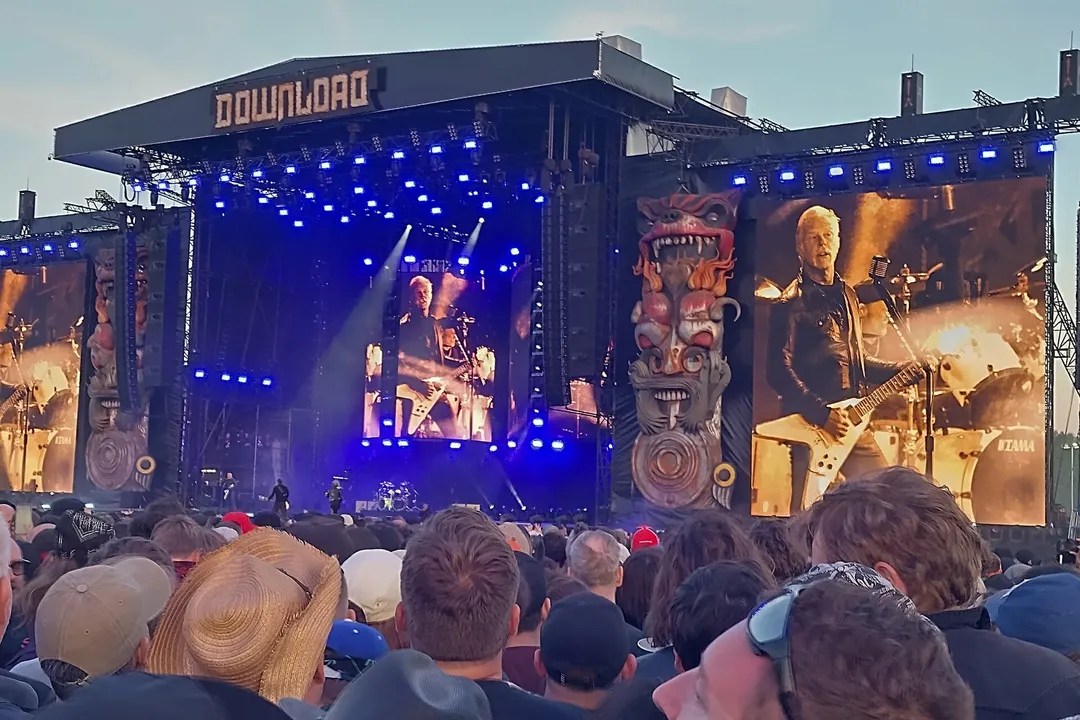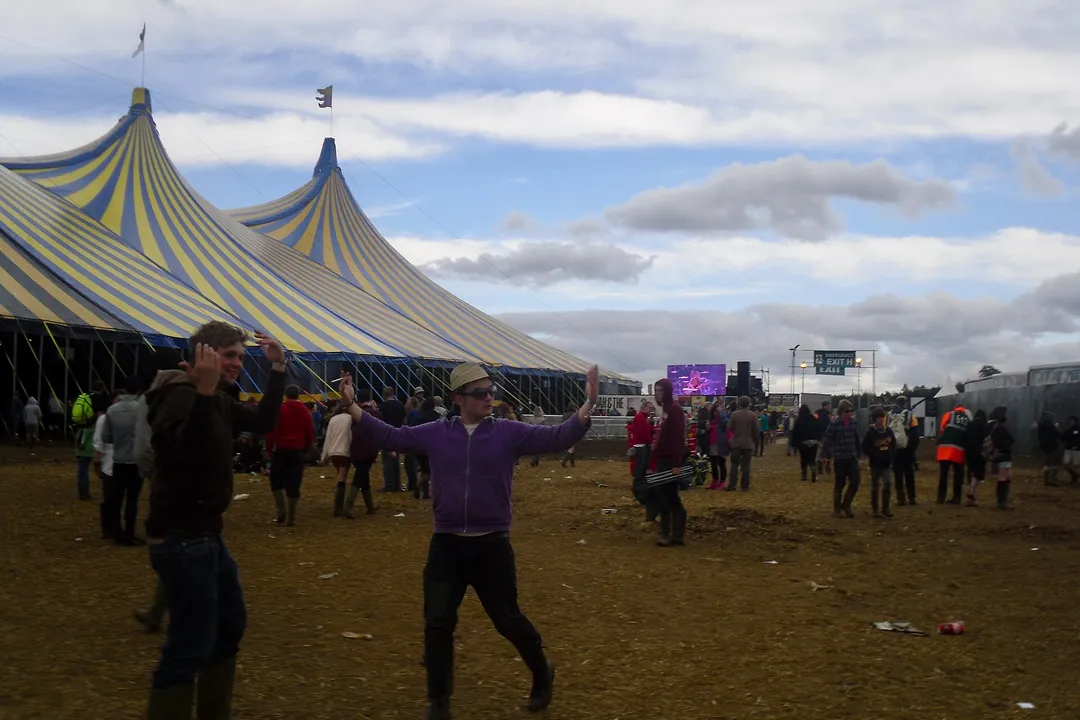
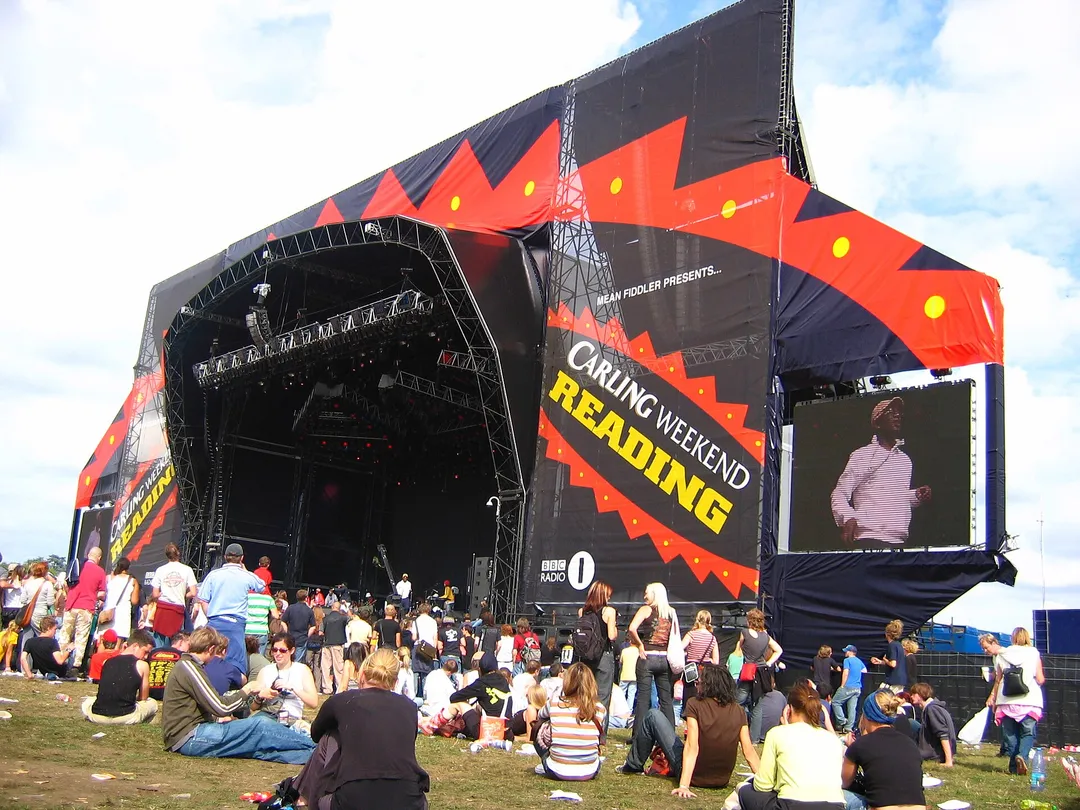
Reading and Leeds are, in Wikipedia's phrase, "a pair of annual music festivals", held at the same time over the August bank holiday weekend. Reading takes place at Little John's Farm on Richfield Avenue; Leeds at Bramham Park, near Wetherby. Most of the acts play both, on different days. That makes them easy to confuse and hard to look up, so here is the whole stretch from 2000 to 2014 in one place: who closed the main stage each night, and what happened along the way.
How the shared bill works
The two sites run the same weekend with the same headliners, rotated. From 2001, the act closing Reading on the Friday closed Leeds on the Saturday; Reading's Saturday headliner closed Leeds on the Sunday; and Reading's Sunday headliner opened the Leeds weekend on the Friday. In 2009 and 2010 the rotation ran the other way round. In 2000 Leeds ran a day behind Reading, from the Saturday to the bank-holiday Monday.
Below, each year lists the three main-stage headliners in Reading's order, Friday to Sunday. Where the two sites ended differently, it says so.
Every headliner, 2000–2014
- Oasis, Pulp (billed as co-headliners with Beck and Gomez), Stereophonics. Leeds at Temple Newsam ran Saturday to Monday.
- Travis, Manic Street Preachers, Eminem, with Marilyn Manson on Eminem's bill.
- The Strokes and Pulp (co-headline), Foo Fighters, The Prodigy (with The Offspring at Reading). Guns N' Roses played Leeds only, on the Friday.
- Linkin Park, Blur, Metallica. Leeds's first year at Bramham Park. The White Stripes pulled out.
- The Darkness, The White Stripes, Green Day. 50 Cent, on Green Day's day, was bottled off at Reading.
- Pixies, Foo Fighters, Iron Maiden.
- Franz Ferdinand, Muse, Pearl Jam.
- Razorlight, Red Hot Chili Peppers, Smashing Pumpkins. The last "Carling Weekend".
- Rage Against the Machine, The Killers, Metallica: three American headliners.
- Kings of Leon, Arctic Monkeys, Radiohead. Leeds ran the days in reverse.
- Guns N' Roses, Arcade Fire, Blink-182. Guns N' Roses started more than an hour late at Reading.
- My Chemical Romance, The Strokes / Pulp (the Strokes closed Reading, Pulp closed Leeds), Muse.
- The Cure, Kasabian, Foo Fighters.
- Green Day, Eminem, Biffy Clyro.
- Queens of the Stone Age / Paramore (QOTSA closed Reading, Paramore closed Leeds), Arctic Monkeys, Blink-182.
From a jazz lawn to Reading
The festival is far older than its Leeds twin. It began as the National Jazz Festival, conceived by Harold Pendleton, the founder of the Marquee Club, and first held at Richmond Athletic Ground in 1961. Through the 1960s it moved between Windsor, Kempton Park, Sunbury and Plumpton. The Rolling Stones played in 1963, the year rhythm and blues acts were first added, and by 1969, according to Wikipedia, jazz had disappeared from the line-up entirely. In 1971 it reached its permanent home at Reading.
Leeds's bad years
The Leeds leg was added in 1999 at Temple Newsam, a country estate that had hosted V Festival in 1997 and 1998. Its early years were rough. The 2001 event was marred by violence, and Leeds councillors initially refused a licence for 2002; it was confirmed only the month before the festival.
Then, in the early hours of 26 August 2002, it happened again. BBC News reported that several hundred festival-goers "went on the rampage" after the music finished, burning two toilet blocks to the ground and attacking police with missiles. Skips were set alight and cables pulled down, and 200 officers, many in riot gear, were sent in. West Yorkshire Police described the violence as:
“sustained, determined and mindless”
— West Yorkshire Police, via BBC News, 26 August 2002
More than 50,000 people had attended over the three days. The festival boss, Melvin Benn, argued that cancelling Leeds would show "a lack of Yorkshire grit". Leeds survived, but not at Temple Newsam: in 2003 it moved to Bramham Park, near Wetherby, and BBC News reported that 70,000 fans enjoyed a peaceful weekend.
Guns N' Roses and the curfew
Guns N' Roses turn up twice in these fifteen years, and both times the bill bent around them. In 2002 they played Leeds only, on the Friday; NME said only that "other commitments" kept them from Reading. When they were booked to headline both sites in 2010, Benn told NME he had a plan for their timekeeping:
“I think I'm going to tell them they're playing the day before [laughs] it's the easiest thing really.”
— Melvin Benn to NME, March 2010
It did not work. According to Pollstar, the band started their Reading headline set at 10.30pm, more than an hour late, against an 11.30pm curfew. By the encore it was roughly midnight, and when they came back for "Paradise City", the sound had been switched off on everything except the drums. At Leeds two nights later they were half an hour late, with an 11pm curfew.
When the crowd says no
The best-documented bottling of the period came in 2004. 50 Cent played on the Sunday, on Green Day's bill. Rolling Stone reported that he was "sent packing" after a short set when the crowd pelted him with bottles, while at Leeds, where he had played on the Friday, festival-goers "preferred instead to simply ignore him". Accounts of how long he lasted differ: Rolling Stone said thirty minutes, Wikipedia says just under twenty. The same Rolling Stone report was no kinder to The Darkness, saying they had delivered "one of the weekend's most disappointing performances".
Repeat closers
Read the table again and the same names keep coming back. Foo Fighters headlined three times in the period, in 2002, 2005 and 2012. Metallica closed the weekend in 2003 and 2008, Muse in 2006 and 2011, Green Day in 2004 and 2013, The Strokes in 2002 and 2011, Eminem in 2001 and 2013, Arctic Monkeys in 2009 and 2014, and Blink-182 in 2010 and 2014. When Eminem returned in 2013, NME noted it was his first time back at Leeds since 2001.
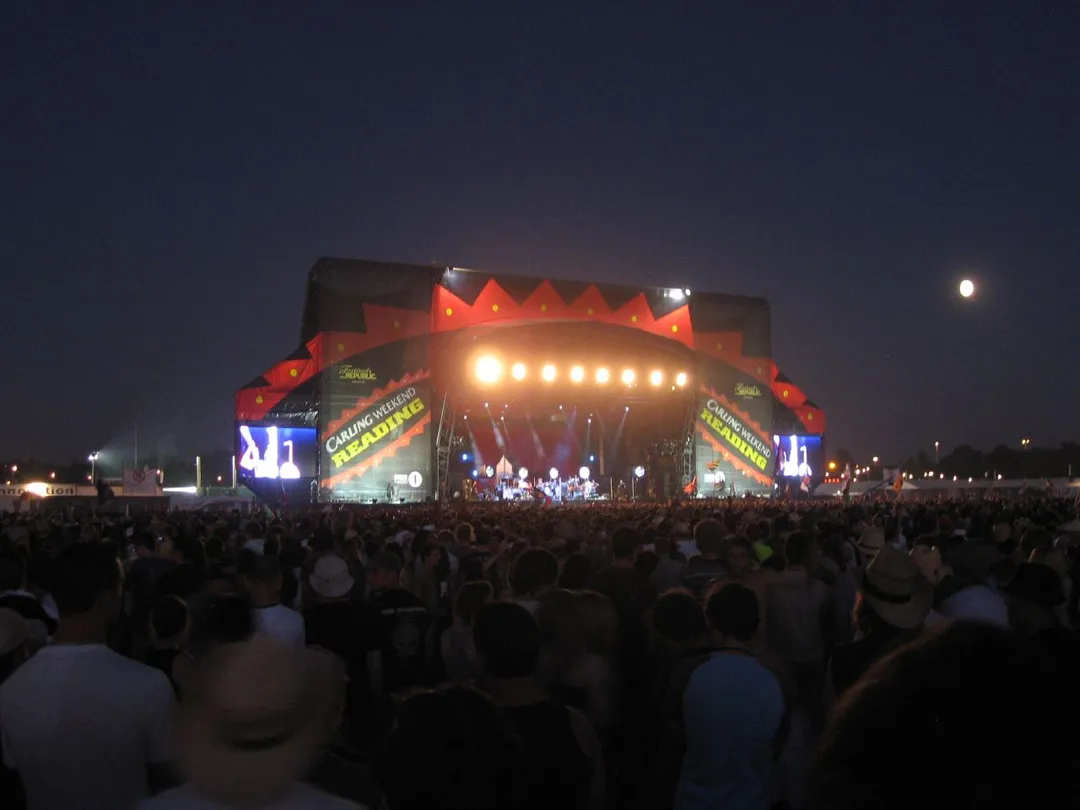
Some bills were famous for who was missing. The White Stripes pulled out of 2003 after an accident forced Jack White to cancel, and headlined a year later. In 2008 Rage Against the Machine took the Reading stage in Guantanamo Bay-style outfits, and at Leeds, NME reported, the crowd pressure was such that they had to pause and ask the audience to step back. In 2011 Jarvis Cocker joined The Strokes on stage at Reading, on the weekend the two bands shared a headline slot.
The business behind the bill
From 1998 to 2007 the festivals were sold as the Carling Weekend, and the sponsored title was dropped in November 2007. Behind them, Mean Fiddler had taken control of Reading from Pendleton at the end of the 1980s. In 2005 Mean Fiddler accepted a takeover by a company owned by Live Nation and Denis Desmond's MCD, and in 2007 the festival business became Festival Republic, run throughout the period by Melvin Benn.
How big it got
The numbers grew with the bills. A weekend ticket cost £80 in 2000, including camping, and £95 in 2003; by 2009 it was £175, and Pollstar reported that weekend tickets had sold out within 24 hours for the seventh year in a row. Leeds grew from more than 50,000 people in 2002 to 70,000 in its first Bramham year, and a festival announcement in 2010 put the site's limit at 70,000. By 2011 Reading was described as an 87,000-capacity event.
Fifteen years, two fields, and a bill that went from Oasis and Travis to Paramore and Arctic Monkeys. If you were in one of those crowds, it is worth writing down which night it was: with two sites and rotating days, the year alone does not tell you who you saw.
Were you there?
Add the years you went to your OutTwo diary, and find the people who were in the same field.
Join OutTwo freeSources
- Headliners, rotation, notes per year: Wikipedia, “Reading and Leeds Festivals line-ups” and “Reading and Leeds Festivals”, read 10 Oct 2026, checked against NME's announcement for each year (2000–2014), Gigwise, 30 Mar 2009 and Digital Spy, 12 Mar 2012
- The 2002 riot and attendance: BBC News, 26 Aug 2002; Bramham Park 2003: BBC News festival map, 2003
- Guns N' Roses 2010: NME, 29 Mar 2010 and Pollstar, 30 Aug 2010; 2002: NME, 29 Apr 2002
- 50 Cent, The Darkness and The White Stripes: Rolling Stone, 2004; RATM 2008: NME, 25 Aug 2008; Eminem 2013: NME, 24 Aug 2013
- Origins: Wikipedia, “Reading and Leeds Festivals” and “National Jazz and Blues Festival”; ownership: Wikipedia, “Festival Republic” and the Guardian, 14 Aug 2007; Leeds sites: Wikipedia, “Temple Newsam” and “Bramham Park”
- Ticket prices: NME (28 Feb 2000, 7 Apr 2003) and Pollstar, 1 Apr 2009; capacities: the Leeds festival site (16 Nov 2010) and eFestivals (Reading 2011), both via the Internet Archive