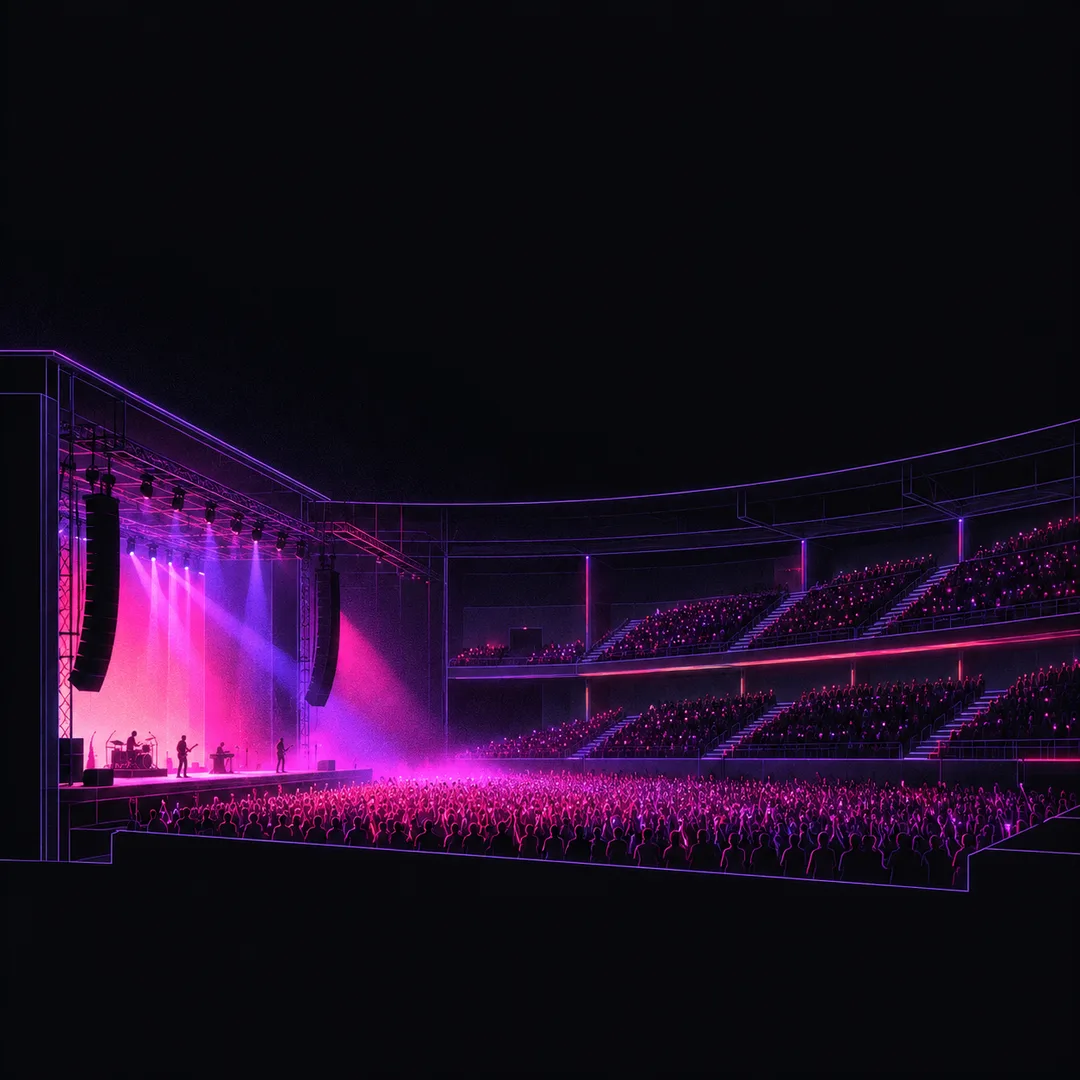
The same band, the same night, can feel like two different gigs depending on where you are. Pressed against the barrier, it is sweat, volume and eye contact. Halfway back by the sound desk, it is the best mix in the room. Up in the seats, it is the whole light show and a place to put your drink. On a lawn, it is a picnic with a soundtrack. None of these is the right answer. The right answer is the one that matches the night you want, and that starts with knowing what your ticket actually says.
First, decode the ticket
GA (general admission) means your spot is not reserved. Ticketmaster defines it as seating or standing areas "occupied on a first-come, first-served basis", and notes that standing room only (SRO), pit and lawn tickets are all types of GA, with no seats at all. If a GA ticket shows something like "Row GA0, Seats 1 and 2", that is for the ticketing system's inventory only; it does not describe a real place in the room.
Pit usually means a separate standing zone at the front of the floor. Rules vary by show. At Moody Center in Austin, for example, a 2024 Twenty One Pilots show handed out numbered wristbands for priority entry to the pit to the first 500 fans, while pit ticket holders without a wristband could still get in, just later. Confusingly, in crowd-safety guidance "the pit" means something else: the gap between the stage and the crowd barrier, where the security staff work.
Golden circle, gold circle, front standing and early entry are names promoters give their own products, so read the description for your show. At BST Hyde Park in 2024, for instance, Gold Circle was a standing area with its own entrance and access up to an hour before the main gates, and you could leave it for the general area and come back. A cheaper "Primary Entry" ticket also let you in up to an hour early, to get to the front of general admission before everyone else.
The pit and the front of the floor
Choose it if you want to be close enough to see faces, and you don't mind being hot, squashed and loud for three hours. The front is first come, first served, so the people on the barrier have usually queued for a long time; at pit shows with numbered wristbands, distribution can start early in the day.
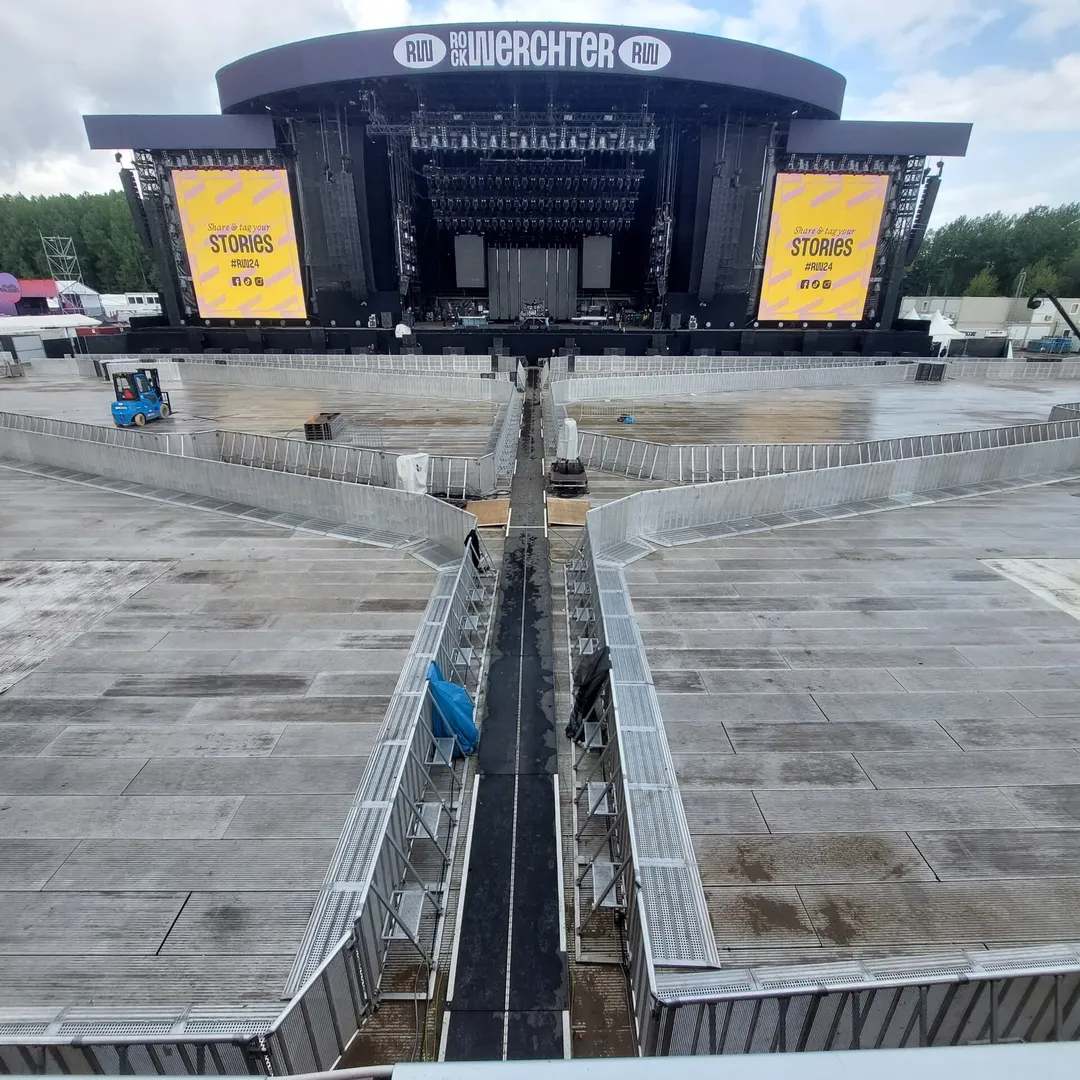
Barriers exist because the front is where the pressure builds. The UK's Health and Safety Executive says stage barriers are designed to retain and resist audience pressure, and that big events may use double or triple barriers in front of the stage to reduce the likelihood of crowd collapse: that is why some shows split the floor into pens. A Western Australia health guideline on moshing says the gap between stage and barrier should be at least 1.5 metres so staff can work, and that people at the barrier should be watched and given water.
Practical rules for the front: eat and drink properly before you go in, because getting out and back is hard. Know where the gap in the barrier is. If you feel faint or crushed, put your hand up: the staff behind the barrier are there to pull people out. And if it gets too much, there is no prize for staying. The second half of the floor is a perfectly good gig.
Halfway back, by the sound desk
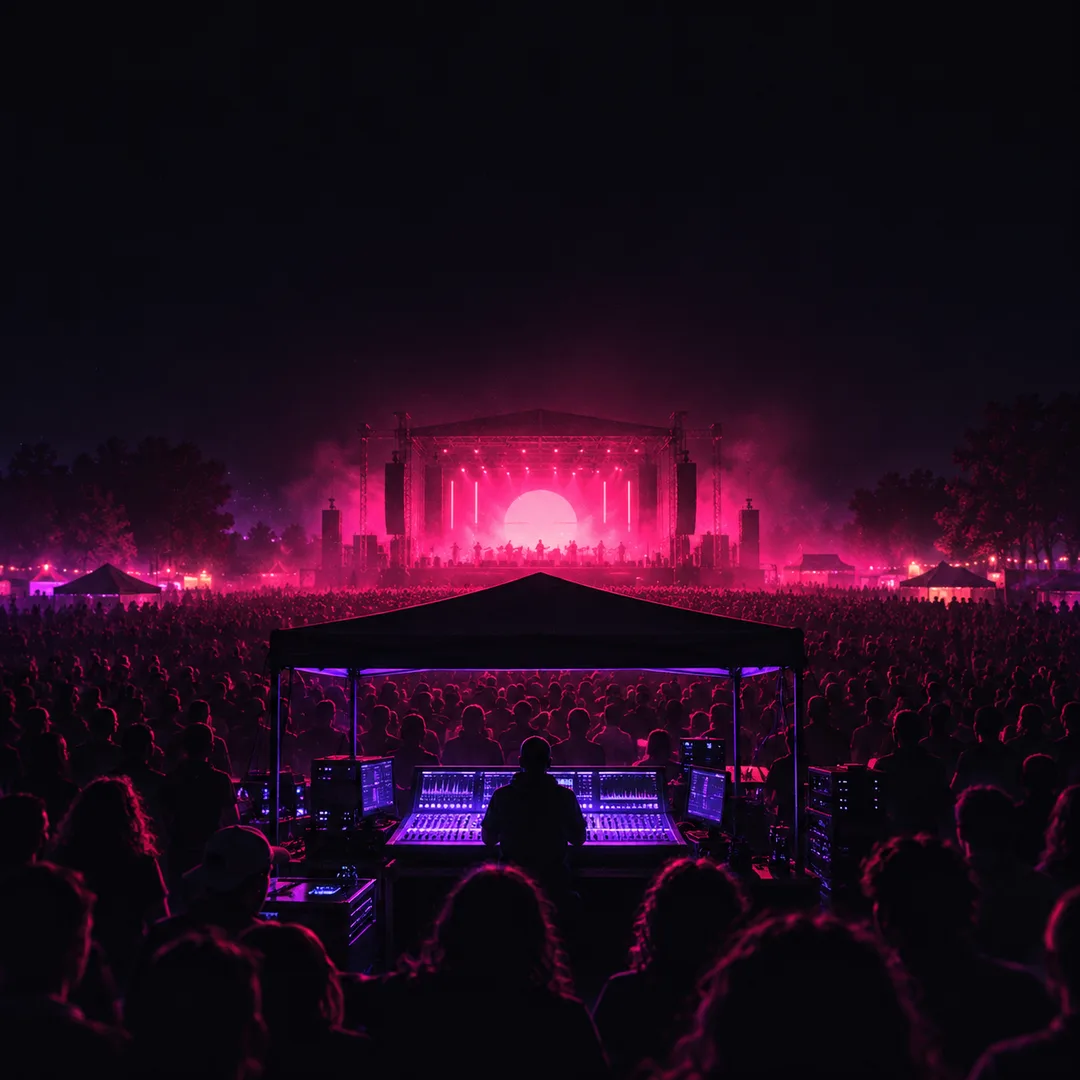
Choose it if you care most about how it sounds. Look for the sound desk: the mixing console in the middle of the floor, usually behind a small barrier. The engineer mixing the show is standing there, judging the sound from that position, which makes it one of the safest bets in the room. Sound On Sound put the principle simply:
“we now recognise that it is essential to have the mix position at front-of-house, placed centrally amidst the audience area.”
— David Mellor, Sound On Sound, 2005
There is a catch. In a 2026 article for ProSoundWeb, the engineer Andy Coules wrote that desks are often placed where they are convenient rather than where they sound best: out of the way, near the cabling, off the space that could be sold to paying customers. If the desk is dead centre, stand near it. If it has been pushed to one side, the middle of the room, between the two speaker stacks, is the better guide. Coules's own rule of thumb is an equilateral triangle with the two main speakers as its base, standing just behind the point.
Seats
Choose them if you want to see the whole production, sit down between songs, or you're going with someone who can't stand for three hours. In arenas, the trade-off is distance against height. Stadium and arena designers work with the rake, the slope of the seating, so that each row can see over the row in front; Wikipedia's entry on sightlines notes that the lowest rows are the most sensitive to it because their view angle is so flat. In practice, the first few rows of a gently sloping lower tier can see worse than a few rows further back, and the upper tiers see everything, from further away.
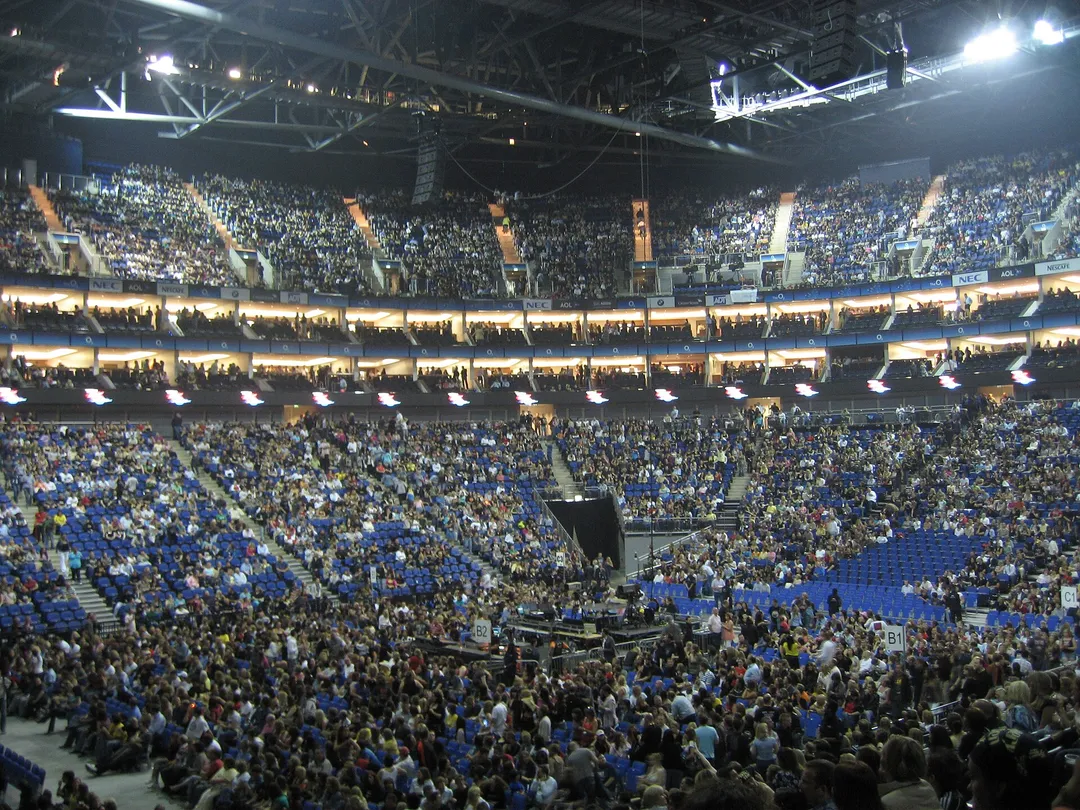
Side-on seats close to the stage trade a side view of the screens and lights for being nearer the band. Facing seats show you the production the way it was designed to be seen.
The lawn
Choose it if you want the cheapest way in, room to move and a summer evening outdoors. Many American amphitheatres have a covered pavilion of seats near the stage and a sloping lawn behind it. At Saratoga Performing Arts Center in New York, for example, the main stage holds 25,000 people: 5,200 sheltered seats and a lawn for another 20,000. Lawn tickets are GA, so the best patches go to whoever arrives first.
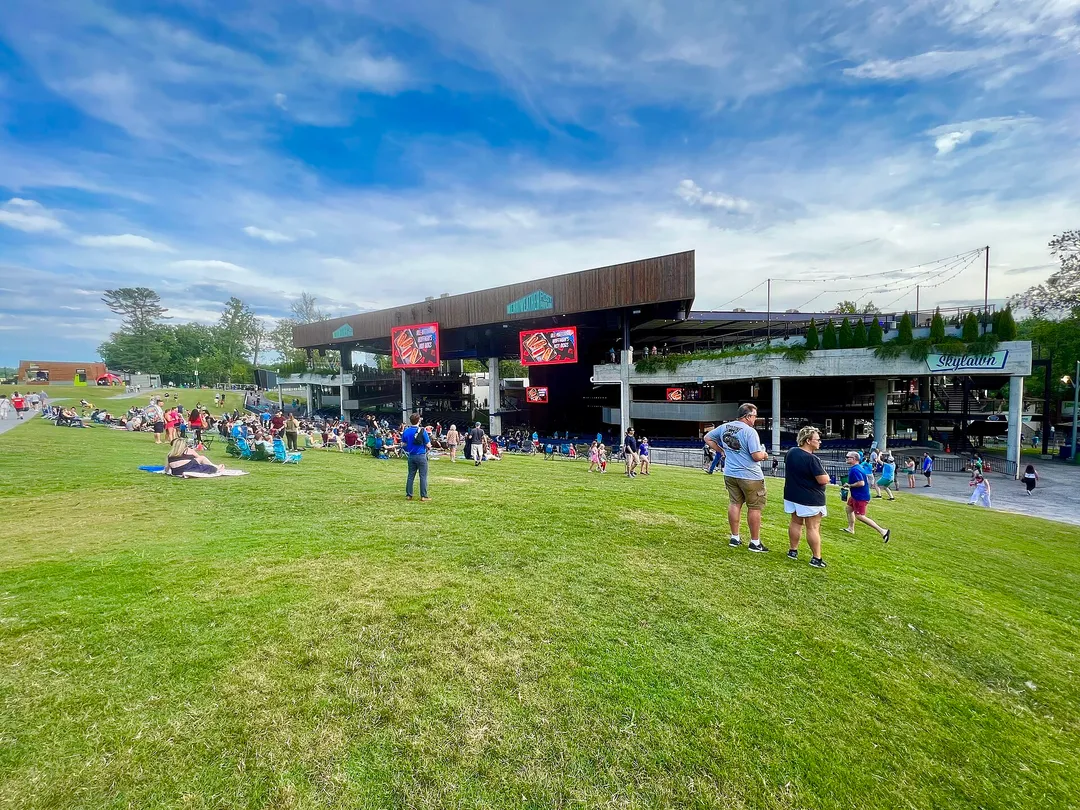
Check the venue's rules before you pack. At SPAC, since 2025, outside chairs are not allowed at Live Nation shows and lawn chairs are available to rent instead, while small blankets and personal-sized umbrellas are allowed. Rules differ between venues and can change on the day, so the venue's own page is the one to trust. Bring layers: once the sun goes down, a lawn gets cold.
Your ears get a say too
Wherever you stand, it will be loud. The US National Institute on Deafness and Other Communication Disorders lists concerts at 94 to 110 decibels, and says long or repeated exposure at or above 85 can cause hearing loss. In 2022 the World Health Organization published a standard for safe listening venues and events, including a maximum average sound level of 100 decibels; its own guide to safe listening puts the safe weekly dose at 100 decibels at about 20 minutes.
Three things help, and the WHO recommends all of them: stay away from the speakers, because sound gets quieter as you move away from the source; wear earplugs, properly fitted; and rest your ears in a quiet space for 10 minutes every hour. Reusable musician's earplugs are designed to turn the volume down without muffling the music. Very few people bother: a 2018 CDC survey found only about 8% of American adults consistently wore hearing protection at loud events.

If you need step-free access or a seat with a view
Many venues and festivals have viewing platforms. The UK charity Attitude is Everything describes them as raised, ramped platforms built so that customers can be seated and still see over the audience, open to anybody who needs one for a reason related to their access requirements. Usually you have to apply in advance, and you'll often be given a wristband for the platform. Some arenas now sell platform spaces online; The O2 in London offers two, with full wheelchair access and room for a personal assistant.
The quick version
Want to be close? Pit or front of the floor: queue early, eat first, earplugs in. Want the best sound? The middle of the floor, near the sound desk if it is central. Want to see the whole show? Seats facing the stage, a few rows up rather than the very front of a low tier. Want a relaxed, cheap night outdoors? The lawn: arrive early and check the chair rules. Need step-free access? Apply for the viewing platform when you buy. Whatever you pick, stay off the speaker stacks.
Going with someone?
Find people going to the same show, agree where to meet before the doors open, and keep every gig in your diary.
Join OutTwo freeSources
- General admission, SRO, pit and lawn: Ticketmaster help centre; pit wristbands: Moody Center; Gold Circle and Primary Entry: BST Hyde Park 2024 ticket descriptions, read 10 Oct 2026
- Barriers and the front: HSE, stage barriers; WA Health, guidelines for safer moshing environments
- The sound desk: Sound On Sound, Dec 2005; ProSoundWeb, 10 Jun 2026
- Sightlines: Wikipedia, “Sightline (architecture)”; the lawn: SPAC amphitheater and SPAC, Live Nation shows
- Hearing: WHO, 2 Mar 2022; WHO, safe listening Q&A; NIDCD; CDC MMWR, 19 Oct 2018
- Viewing platforms: Attitude is Everything; Music Week, The O2